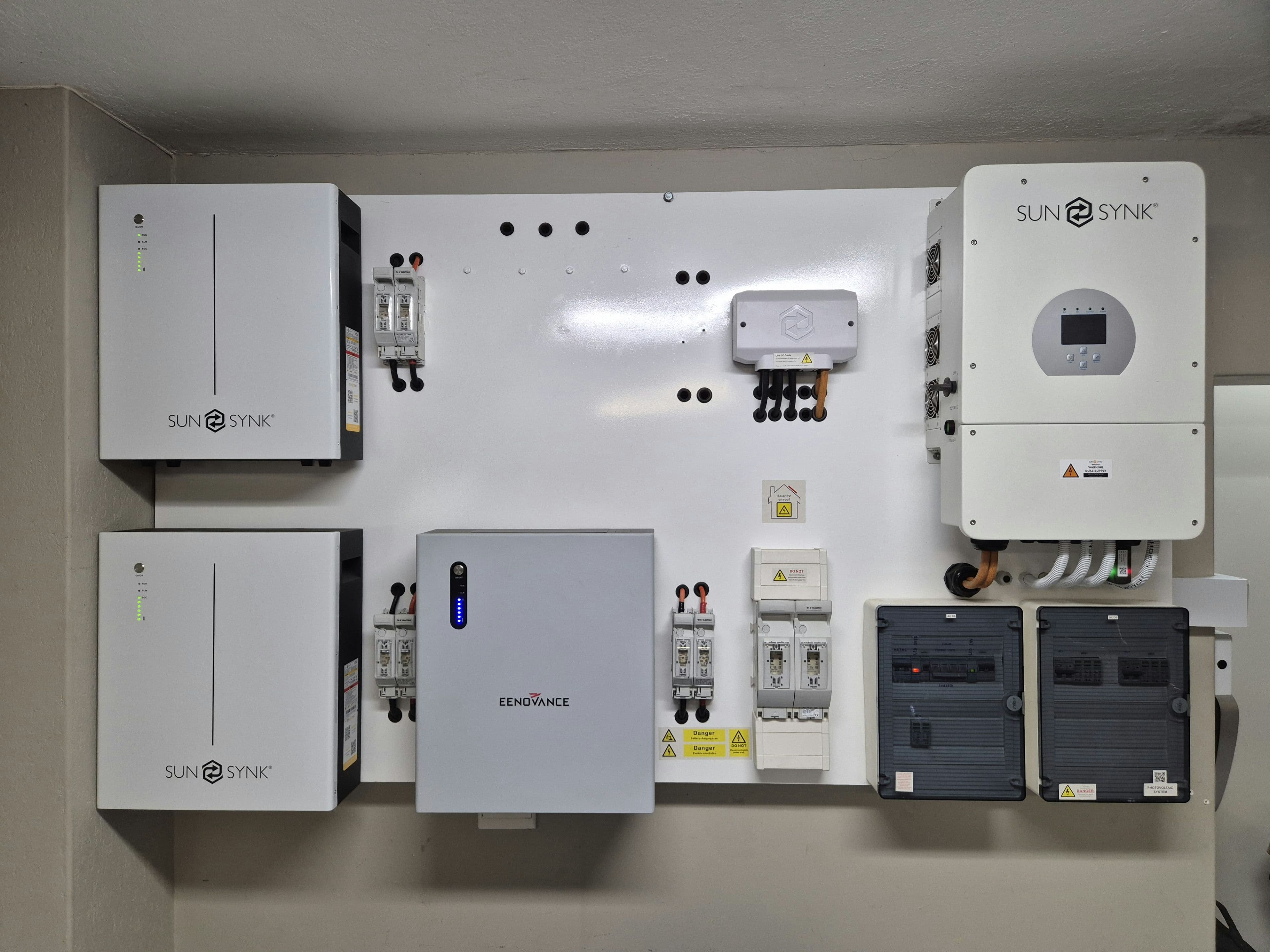
Of everything we cover on this site, an inverter and battery system is the biggest single purchase most households make in response to load-shedding. Getting the sizing wrong is an expensive mistake, so this guide focuses entirely on how to think through the decision, not on pushing a specific product.
Step 1: List what you actually need to run
Before looking at a single inverter, write down every device you want powered during an outage and its wattage (usually printed on the device or its power adapter). Separate this list into 'essential' (router, lights, phone charging, a fridge) and 'nice to have' (TV, microwave, kettle). Kettles, microwaves, and heating elements draw far more power than most people expect and dramatically increase the system size you need.
Step 2: Understand the two numbers that matter
- Inverter capacity (VA or watts) — determines how much you can run at once
- Battery capacity (Ah at a given voltage, or kWh) — determines how long you can run it before recharging
A common mistake is buying a large inverter with a small battery, which can power a lot of devices for a very short time, or a small inverter with a big battery, which lasts a long time but can't handle a kettle or microwave without tripping.
Rough sizing guide by household need
| Need | Approx. inverter size | Notes |
|---|---|---|
| Lights, router, phone charging only | 300–600VA | Smallest, most affordable entry point |
| Above + TV and a fridge | 1000–1500VA | The most common realistic household target |
| Above + occasional kettle/microwave use | 2000VA+ | Needs a larger battery bank and thicker cabling — budget accordingly |
Battery types compared
| Type | Pros | Cons |
|---|---|---|
| Lead-acid (flooded) | Cheapest upfront | Needs maintenance, shorter lifespan, heavier |
| Sealed/gel lead-acid | Maintenance-free, safer indoors | Still bulky, moderate lifespan |
| Lithium (LiFePO4) | Longer lifespan, lighter, more charge cycles | Higher upfront cost |
Installation tips
Always use a qualified electrician for the changeover switch that isolates your inverter circuit from the grid — this protects utility workers and your own equipment. Never attempt to wire an inverter directly into your household circuit without this isolation.
💡 Anesu's tip
Get at least two written quotes from local installers, and ask each one to show their sizing calculation, not just a final number — this makes it easy to spot who's overselling capacity you don't need.
Total cost of ownership
| Factor | What to expect |
|---|---|
| Typical price band | From a few hundred dollars for an entry-level setup to well over a thousand for a larger lithium system |
| Realistic lifespan | Lead-acid batteries: 2–3 years; lithium (LiFePO4): often 8–10+ years |
| Hidden costs | Professional installation and changeover-switch wiring, plus eventual battery replacement — budget for this separately from the inverter itself |
Pre-purchase checklist
- 1.Get your sizing calculation in writing from at least two installers
- 2.Confirm a qualified electrician will install the changeover switch
- 3.Compare lead-acid vs lithium total cost over 5 years, not just upfront price
- 4.Ask what happens to the warranty if you add solar panels later
Related reading
Our take
Size for your essential list first, treat everything else as a stretch goal, and always leave headroom of about 20% above your calculated need so the system isn't running at its absolute limit every day.