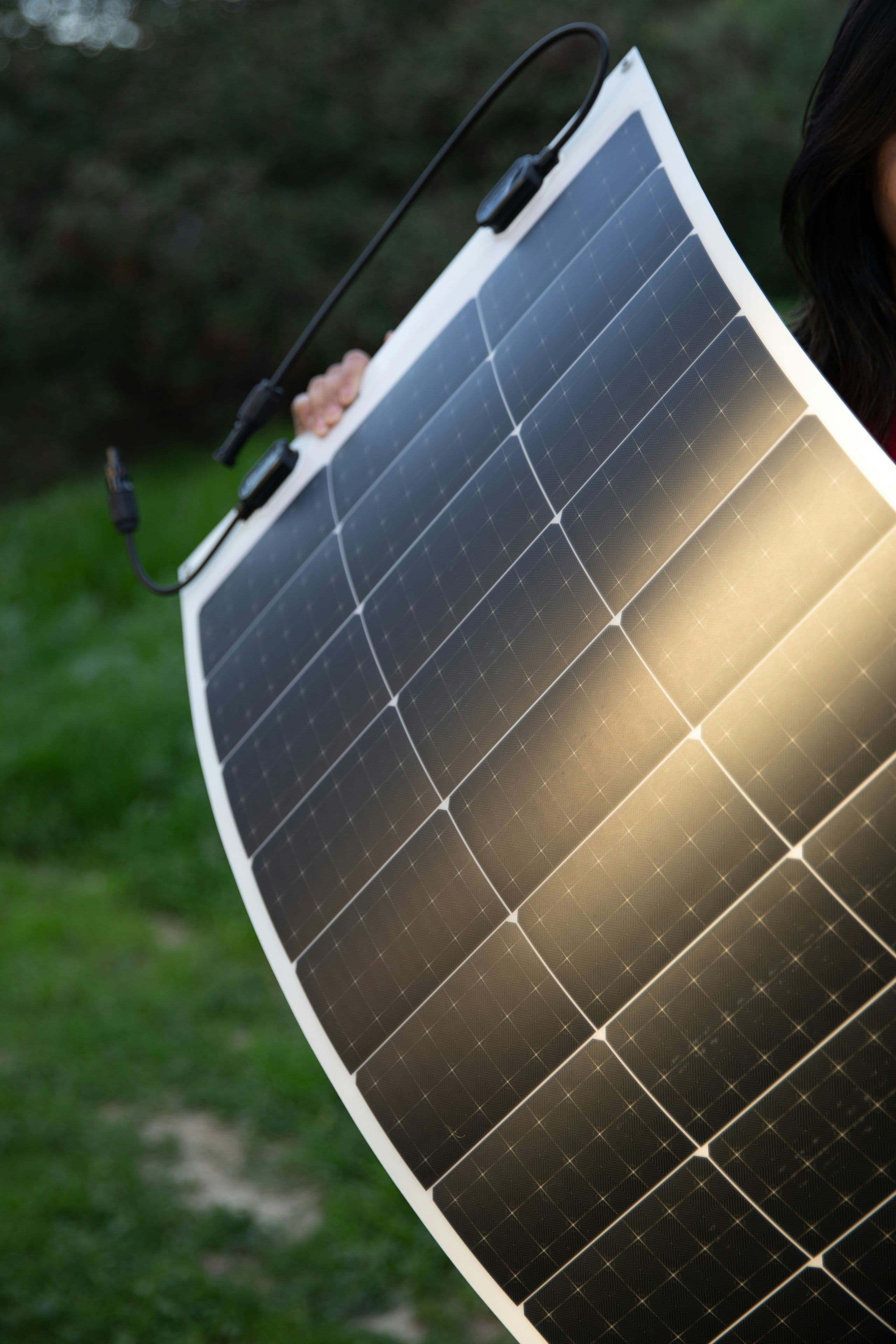
Portable folding solar panels have become popular for rural homesteads, camping trips, and as a mobile backup to a home inverter setup. The wattage printed on the panel is only a starting point for understanding what it can realistically do for you.
Understanding rated watts vs real-world output
A panel rated at 100W is tested under ideal laboratory conditions — direct overhead sun, no clouds, correct angle. In real use, expect 50–70% of the rated output on a good day, and significantly less on an overcast one. Budget your expectations around the lower number, not the marketing number.
What to check before buying
- Output connector type (confirm it matches your charge controller or power station's input)
- Foldability and weight if you'll be carrying it regularly
- Whether it includes a built-in charge controller or requires a separate one for battery charging
- Weather resistance rating if it will be used or stored outdoors regularly
Matching panel size to your goal
| Goal | Approx. panel size | Notes |
|---|---|---|
| Phone and small device charging only | 20–60W | Compact, foldable, easy to carry |
| Charging a portable power station daily | 100–200W | Needs a stable stand or ground mount for consistent angle |
| Supplementing a home solar/inverter setup | 300W+ | Usually fixed-mount rather than portable, best installed by a professional |
Placement tips that actually change your output
- 1.Face the panel directly at the sun and re-adjust the angle every couple of hours rather than leaving it flat
- 2.Avoid even partial shade — a single shaded cell can drag down the output of the whole panel string
- 3.Keep panels clean; dust buildup, common during Zimbabwe's dry season, measurably reduces output
💡 Anesu's tip
If you're pairing a portable panel with a power station, confirm the maximum input wattage the power station accepts — feeding it more watts than it can accept doesn't speed up charging, it just wastes potential.
Total cost of ownership
| Factor | What to expect |
|---|---|
| Typical price band | $30–$300+ depending on wattage and build quality |
| Realistic lifespan | 5–10+ years for the solar cells themselves, though folding portable panels see more wear at the hinges and connectors than fixed rooftop panels |
| Hidden costs | A separate charge controller if one isn't built in, plus connector adapters to match your power station or battery |
Pre-purchase checklist
- 1.Confirm the output connector matches your charge controller or power station
- 2.Check whether a charge controller is built in or needs buying separately
- 3.Weigh foldability and weight against how often you'll actually carry it
- 4.Check the weather-resistance rating if it'll live outdoors
Related reading
Our take
Buy portable solar panels based on your realistic daily charging need, not the biggest wattage number you can afford. A well-placed, correctly-angled smaller panel often outperforms a bigger one left flat in partial shade.