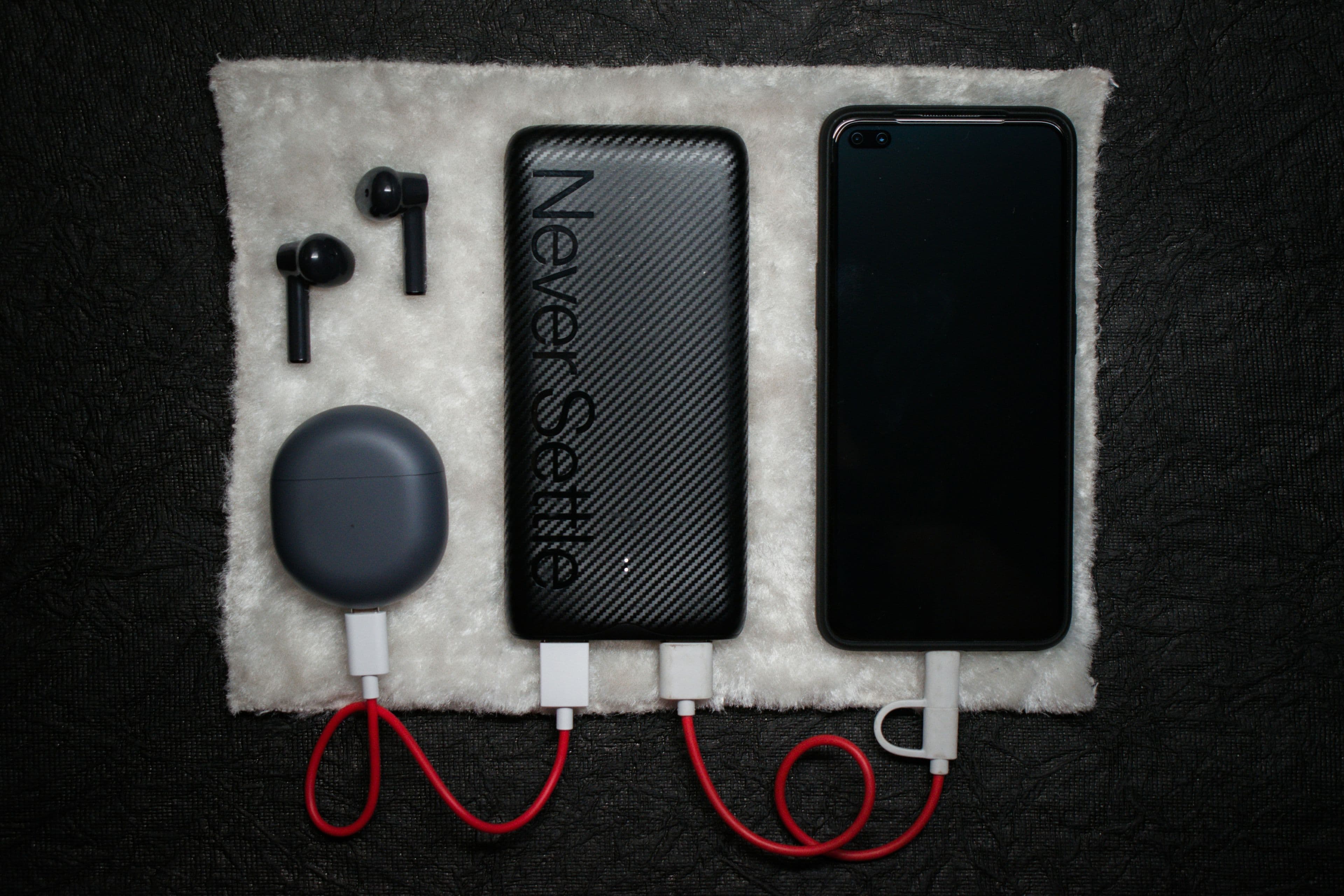
Standard 10,000mAh power banks are fine for shorter outages, but when load-shedding stretches to 10 or more hours regularly, you need to think about capacity, output, and how many devices you're actually trying to keep alive differently.
Do the math on your actual need
A modern smartphone battery is typically 4,000–5,000mAh. Charging it from empty to full uses roughly that much capacity, plus some loss to heat and conversion inefficiency — so a 20,000mAh power bank realistically gives you about three full phone charges, not four or five as raw math might suggest.
Capacity vs your household size
| Household | Suggested capacity | Why |
|---|---|---|
| Single person, phone only | 10,000–20,000mAh | Covers one to two days of moderate use between charges |
| Small family, multiple phones | 20,000–30,000mAh | Enough headroom for several devices across a long outage |
| Household also charging a router/laptop | 30,000mAh+ with USB-C PD output | Laptops and routers draw more power and need higher-output ports |
Output matters as much as capacity
- USB-C Power Delivery (PD) output charges modern phones and even some laptops significantly faster than standard USB-A
- Multiple simultaneous output ports let you charge more than one device at once, which matters most during long outages when everyone needs power
- Pass-through charging lets the power bank itself charge while also outputting to a device, useful for short power windows
Charging strategy during unpredictable schedules
Keep your power bank topped up during every available power window rather than waiting until it's empty — unpredictable load-shedding schedules mean you can't always count on a long charging window when you need one.
💡 Anesu's tip
Buy a power bank with a visible percentage display rather than just a few LED dots — knowing you're at 43% rather than 'somewhere between two and three dots' makes planning your remaining power much easier.
Total cost of ownership
| Factor | What to expect |
|---|---|
| Typical price band | $15–$50 depending on capacity and output ports |
| Realistic lifespan | 1.5–2 years (roughly 300–500 charge cycles) before capacity noticeably drops |
| Hidden costs | A USB-C PD-capable cable if one isn't included, since a standard cable will bottleneck faster charging |
Pre-purchase checklist
- 1.Calculate your real need based on 60–70% of the rated mAh, not the full number
- 2.Check for USB-C PD output if you'll charge modern phones or a laptop
- 3.Count the output ports against how many people will need power at once
- 4.Prefer a percentage display over a handful of LED dots
Related reading
Our take
For genuinely long outages, prioritize a higher-capacity bank with USB-C PD output and multiple ports over a smaller, cheaper one — the extra upfront cost pays for itself in fewer anxious low-battery moments.